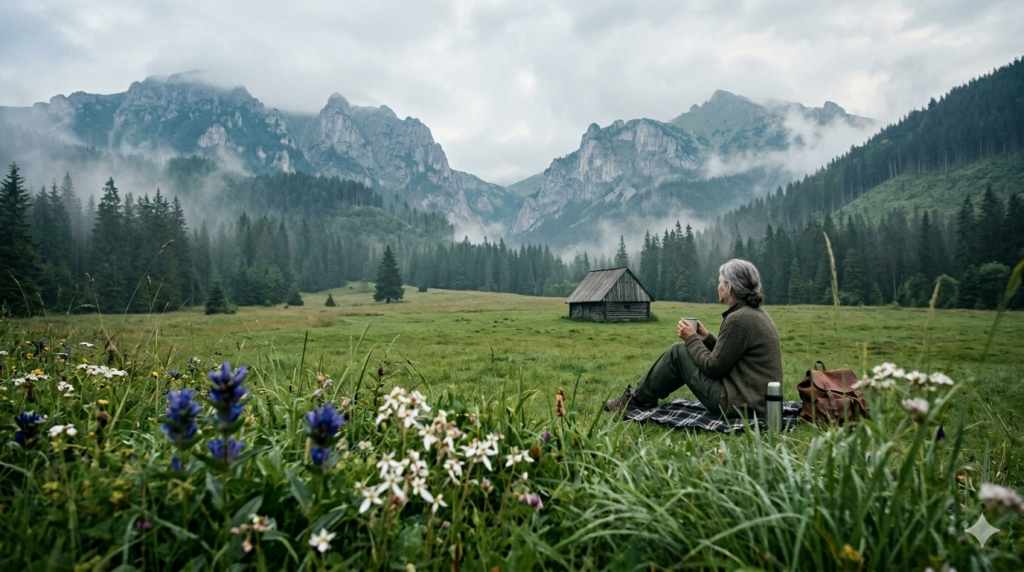
Unknown Spots in Podhale: Hidden Gems Away from the Crowds
Escaping the crowds in the Tatra Mountains can be a real challenge, especially when over five million people visit each year, all hungry for mountain vistas. Meanwhile, the unknown spots of Podhale still offer peace and quiet—in the entirety of 2025, the Lejowa Valley was visited by only 0.14% of all tourists.
Wild Nature and Crowd-Free Trails: Unknown Podhale for the Active
When we think of Tatra trails, we often imagine loud groups of tourists heading towards Morskie Oko. However, what we love most are those moments when the only things you can hear in the forest are the sound of the stream and your own footsteps on the path. These unknown spots in Podhale are our personal list for anyone who wants to feel the true, raw atmosphere of the mountains without standing in line at the ticket office.
Lejowa Valley and Staników Żleb – A Peaceful Alternative to the Kościeliska Valley
If you dream of a walk in total silence, the Lejowa Valley will be a true breath of fresh air. This place is like a gateway to another world, where nature rules by its own laws without the interference of crowds. The statistics show it best—in all of 2025, this valley was visited by only 7,308 people, accounting for just 0.14% of the total traffic in the Tatras (Source: Apartamenty pod Gubałówką).
Staników Żleb is another gem that allows you to escape the hustle and bustle of the nearby road to Kiry. The path leads gently through the forest, surrounded by views of wild, untouched nature. It is here that you can feel that specific, soothing energy of the montane forests, which is hard to find on the most popular routes.
Trail Popularity Comparison (2025 Data):
- Kościeliska Valley: Hundreds of thousands (656,378) of visitors per year.
- Lejowa Valley: Only 7,308 tourists.
- Conclusion: In Lejowa, there is significantly more peace and fresh air per tourist.
Caves for Explorers: Labyrinths in Mylna and Prehistory in Obłazowa
The Tatra caves are a proposition for those who aren’t afraid to get their pants dirty and feel the chill radiating from the inside of the rocks. Mylna Cave provides plenty of excitement, especially when navigating its low corridors with only a flashlight in hand. Although the entire system is over 1,600 meters long, a tourist route of about 300 meters has been prepared (Source: Wikipedia).
However, if you are looking for something to spark your historical imagination, you must visit Obłazowa Cave. A boomerang made of mammoth tusk was found here; it is approximately 42,000 years old and is the oldest object of its kind in Europe (Source: Nauka w Polsce). Standing in the place where Paleolithic hunters camped thousands of years ago makes an incredible impression.
A trip to the caves is a great way to get to know a completely different side of the Tatras—but remember good footwear and a powerful light, as it is pitch black inside. Unknown spots in Podhale, like these caves, allow you to touch the history of the Earth in a very direct way.
Białka Gorge and Skałka Rogoźnicka – Where Nature Meets Geology
The Białka Gorge near Krempachy is one of the most beautiful places in the region, where the river cuts through limestone rocks. The white walls of Obłazowa and Kramnica are reflected in the crystal-clear water, creating a fairytale landscape. It is an ideal place for relaxation, but also for a short geology lesson under the open sky.
Right next to it is the inconspicuous Skałka Rogoźnicka reserve, which is inscribed on the UNESCO World List of Geological Heritage. Although it covers only 0.2556 ha, it protects incredibly valuable fossils from 140 million years ago (Source: Lasy Państwowe). It is fascinating that such a vast history of our planet is enclosed within this small area.
Walking in these surroundings, you will feel how powerful forces shaped what we call home today. There are no entry tickets or barriers here—only pure, majestic nature. We love coming back here ourselves just to sit by the riverbank and listen to its roar.
Culture, Modernism, and the Sacred: Unknown Podhale Spots You Must See
Podhale is not just raw nature and breathtaking views. It is also a soul enchanted in old wood and walls that remember stories from many decades ago. The unknown spots of Podhale often hide right next to the main trails, waiting for someone who truly wants to hear them.
Wooden Architecture: Chochołów, Dębno, and the Secrets of the Łopuszna Manor
Chochołów impresses us with its extraordinary architectural consistency. It is a place where time flows slower and tradition is part of everyday life. In the register of monuments, you will find as many as 108 highlander cottages and farmsteads here (Source: Góry dla Ciebie).
Residents still care for their homes in the traditional way. The walls of the buildings are washed with soap and water twice a year, thanks to which the wood maintains a bright, fresh appearance. It is these details that make us call Chochołów a “living open-air museum.”
When you are in the area, be sure to visit the church in Dębno. The scent of old larch and the silence inside allow for a moment of true stillness. We also recommend visiting the Łopuszna Manor, which hides the secrets of noble life at the intersection of different cultures.
Forgotten Monuments: Hasior’s Organs and the Czorsztyn Tourism Settlement
On the Snozka Pass stand Hasior’s Organs, which “play” together with the mountain wind. This massive steel construction evokes extreme emotions, but leaves no one indifferent. It is worth stopping for a moment to look at the panorama of the lake through the frames of this extraordinary monument.
A completely different, melancholic atmosphere is offered by the Czorsztyn Tourism Settlement. It consists of 31 buildings rescued from being flooded, including 9 historic villas spread over an area of nearly 17 ha (Source: Moje Pieniny). Walking among these houses, you can feel the atmosphere of old summer resorts that disappeared under the waters of the lake.
Where to look for the spirit of the past?
- Chochołów: For those who love traditional highlander architecture.
- Czorsztyn: For those interested in history and the old summer resort lifestyle.
- Łopuszna: For those seeking peace in the shadow of a noble manor.
The Modernist Face of Zakopane: From Willa Tea to the Dark History of the Palace Museum
Zakopane at the foot of Giewont is mainly associated with the “Zakopane Style” (Witkiewicz style). However, this town also has another, older face worth knowing. Willa Tea, built in 1879, represents an archaic style from the pre-Witkiewicz era (Source: Noclegi.net.pl).
It is amazing how this simple highlander hut has stood the test of time in almost unchanged form. It serves as a great reference point for how local architecture has changed over the years, impressing with its rawness and truth about former life in the Tatras.
Difficult but extremely important emotions accompany a visit to the Palace Museum, known as the “Torture Chamber of Podhale.” The former Gestapo headquarters was opened on March 8, 2024, after a thorough renovation costing 21 million PLN (Source: Polskie Radio 24). This place reminds us of the painful chapters of the region’s history that must not be forgotten.
By discovering these unknown places in Podhale, we gain a fuller picture of this land. It is not just beautiful views, but above all, people and their fates written in stone and wood. Every such trip leaves a mark on the heart that you won’t find in any guidebook.
FAQ – Frequently Asked Questions About Unknown Spots in Podhale
Where to escape the crowds in Podhale during the weekend ?
It is best to plan your trip for March, as statistically, five times fewer people visit the Tatras then than in the peak month of August (Source: Apartamenty pod Gubałówką). We also recommend walks in lesser-known valleys, such as the Lejowa Valley, where a soothing silence prevails even on days off. This is our proven way to feel the true magic of the mountains away from the noise and rush.
What to bring on a trip to the Tatra caves without a guide?
A solid light source is key—ideally a flashlight with at least 800 lumens, which will allow you to safely explore dark corridors (Source: Ledlenser). Also, wear clothes you aren’t afraid to get dirty with mud or wet rock, as it can be cramped and damp in the caves. Remember comfortable, non-slip shoes to feel confident with every step underground.
What are the most beautiful scenic routes in Podhale accessible by car?
We recommend the Czorsztyn Loop (Pętla Czorsztyńska), approximately 51 km long, which leads through interesting points such as the UNESCO monument in Dębno or the famous Hasior’s Organs (Source: Visit Małopolska). During this drive, you will be accompanied by beautiful views of the lake surface and the majestic peaks of the Tatras. It is an ideal option for a peaceful day when you want to feast your eyes on the landscape straight from your car window.